Smartphone Verification Layers Reshaping Access Patterns in Progressive Prize Pools and Live Dealer Match Markets
Drew Butler · Aug 11, 2026
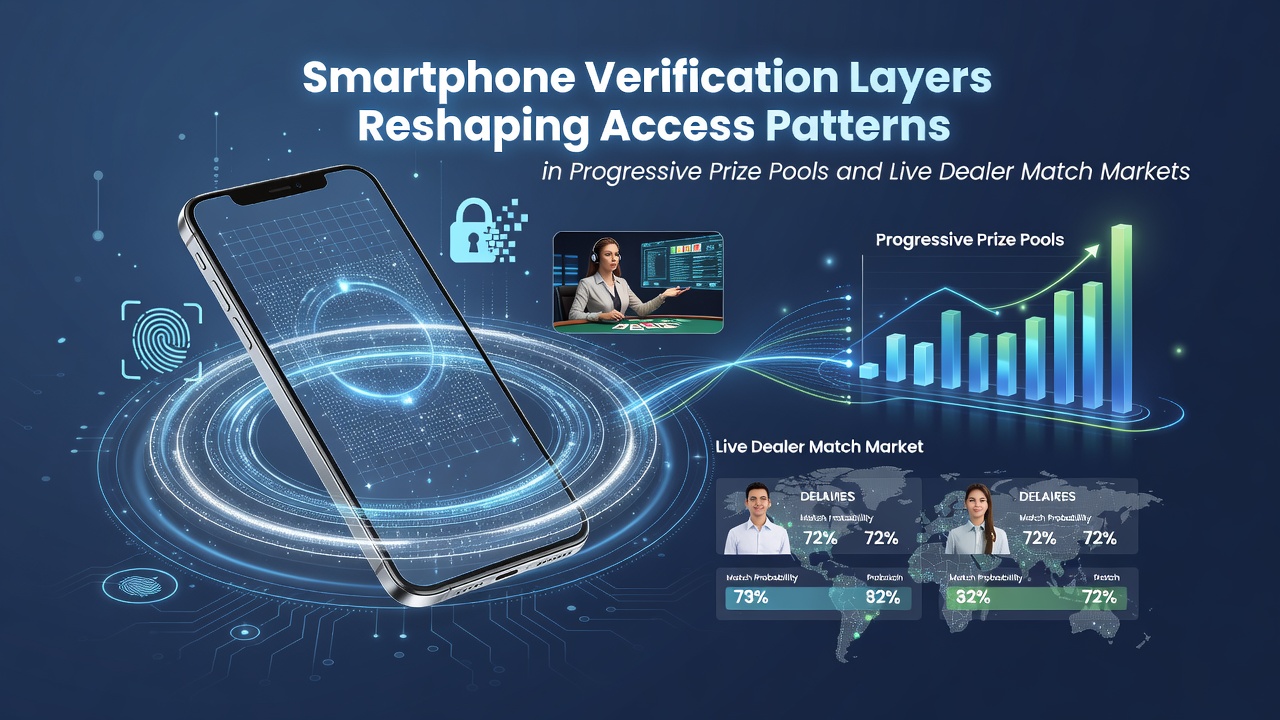
Smartphone Verification Layers Reshaping Access Patterns in Progressive Prize Pools and Live Dealer Match Markets
Smartphone verification layers have expanded across digital gambling platforms since the early 2020s, and data from multiple regulatory regions shows these systems now control entry into progressive prize pools along with live dealer match markets. Multi-stage authentication that combines device biometrics, one-time codes, and account-linked identity checks creates layered gates that users encounter before any wager or jackpot contribution registers. In August 2026 operators reported shifts in session timing because verification sequences often complete in under thirty seconds on updated handsets while older devices require additional steps that delay participation.
How Verification Protocols Interact with Progressive Prize Pools
Progressive prize pools accumulate contributions from linked games across networks, yet access now hinges on verification status that platforms refresh at login and again before each qualifying spin or bet. Systems track device fingerprints alongside government-issued identity documents uploaded once during initial setup, after which subsequent entries rely on facial recognition or fingerprint matches that sync with stored records. Observers note that users who complete full verification early gain immediate eligibility for pool contributions, whereas partial profiles trigger secondary checks that pause play until documents clear. Reports from the Casino Regulatory Authority of Singapore indicate that platforms operating under its oversight recorded a measurable rise in verified accounts during the first half of 2026, correlating with smoother jackpot entries and fewer abandoned sessions at the point of contribution.
Live Dealer Match Markets and Real-Time Authentication Demands
Live dealer match markets allow bets on table outcomes during ongoing rounds, and verification layers here focus on maintaining continuous session integrity rather than one-time gates. Platforms embed token-based checks that revalidate every few minutes or after large stake changes, preventing account sharing while preserving the pace of dealer-hosted play. Research from the Australian Institute of Criminology highlights that these recurring checks reduce instances of disputed settlements because identity confirmation ties directly to each transaction record. Those who study transaction logs find that markets tied to sports fixtures or card outcomes show higher completion rates when verification occurs through dedicated mobile applications instead of browser sessions that sometimes drop authentication cookies mid-round.

Regional Regulatory Approaches and Data Patterns
European authorities such as the Malta Gaming Authority have required operators to log verification timestamps alongside bet placements, producing datasets that reveal how access patterns vary by device type and location. Figures from the first quarter of 2026 showed that users in regions with stronger mobile network coverage completed verification sequences faster, leading to steadier participation in both progressive pools and dealer-hosted markets. Meanwhile the Nevada Gaming Control Board publishes quarterly summaries that track similar metrics for platforms serving American players, noting that verification-related drop-offs occur most often during initial account setup rather than during active sessions. These reports demonstrate that once verification clears, subsequent access to prize pools and match markets follows predictable rhythms tied to device uptime and network stability.
Device-Level Features Driving Access Changes
Modern smartphones incorporate secure enclaves that store cryptographic keys used for gambling authentication, and this hardware support allows platforms to shorten verification flows without sacrificing compliance standards. Applications leverage these features to generate session tokens that expire after set intervals yet renew automatically when the device remains in the user's possession. Data indicates that platforms adopting such methods record lower rates of manual identity reviews because the combination of biometric confirmation and hardware attestation satisfies regulatory thresholds more consistently. People who switch between multiple devices often encounter extra prompts that request re-verification on the new handset, which in turn shapes daily access patterns around primary phones that stay verified longest.
Conclusion
Smartphone verification layers continue to define entry points for progressive prize pools and live dealer match markets through a combination of regulatory mandates and technical capabilities. Records from oversight bodies across Asia, Australia, and North America show consistent patterns where verified accounts maintain higher participation rates once initial setup concludes. As device hardware and platform protocols evolve, access patterns will likely follow the same trajectory of faster, device-bound confirmations that balance security requirements with uninterrupted play.